


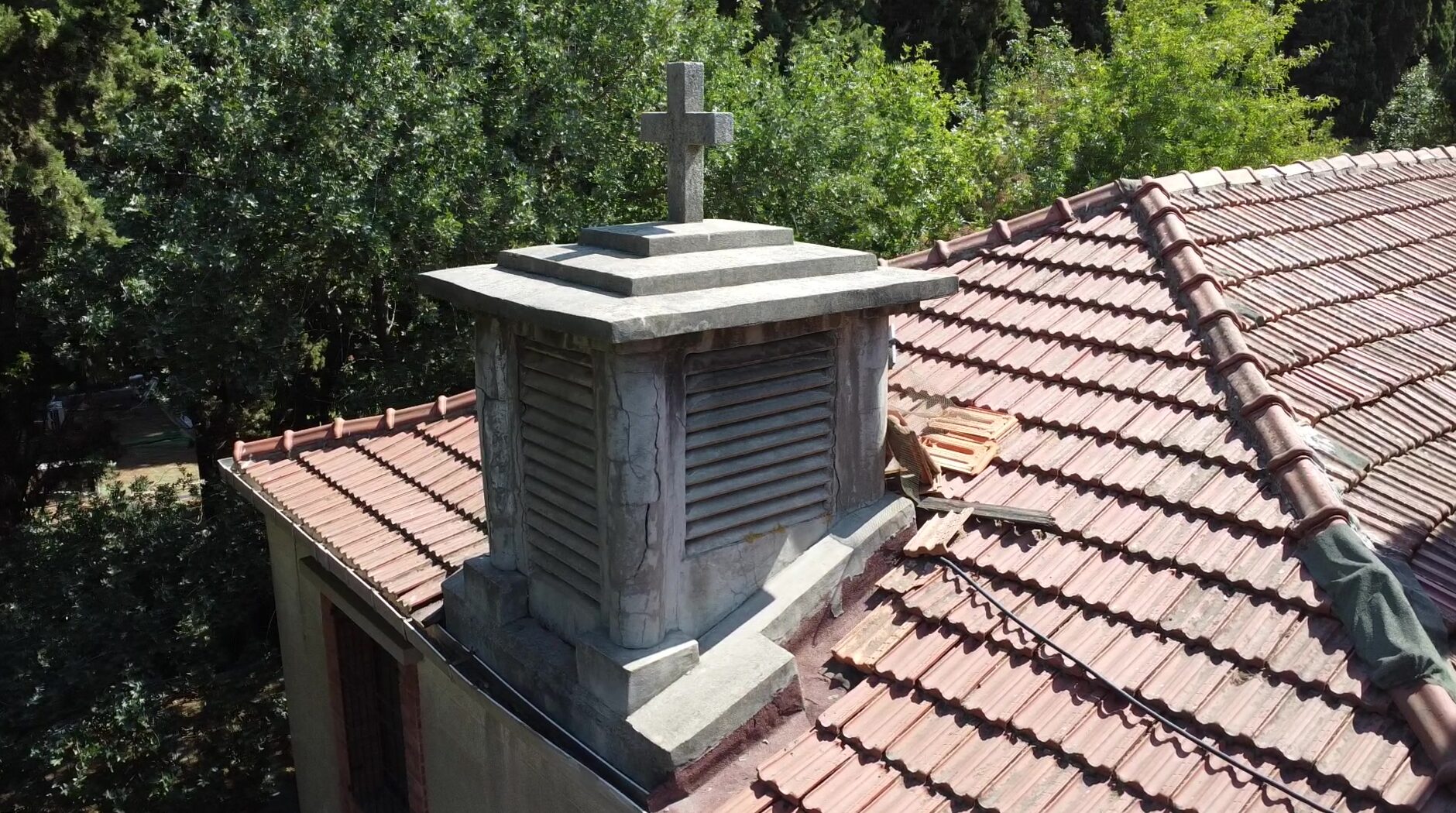
140 yıllık bir hikâye, kaynaklarıylaA 140-year story, with its sources
Aşağıdaki her satır bir kaynağa dayanır; köşeli parantez içindeki numara sayfanın sonundaki kaynak listesine gider. Şapel, Assomption (Augustin) rahiplerinin Fenerbahçe'de kurduğu ruhban okulundan bugüne kalan tek parçadır. Every line below rests on a source; the number in brackets points to the list at the end of this section. The chapel is the last surviving piece of the seminary the Assumptionist fathers founded in Fenerbahçe.
-
1880
Boş bir kıyıAn empty shore
Fenerbahçe'de çok az insan yaşar; Levanten aileler yalnızca yazları gelir. Batı tarafında Capucin rahiplerinin tek katlı küçük bir kilisesi vardır; arazisini Baron Oppenheim bağışlamıştır ve halk ona "halk kilisesi" der. 1884'e gelindiğinde rahipler gitmiş, kilise terk edilmiştir.Hardly anyone lives in Fenerbahçe; Levantine families come only in summer. On the western side stands a small one-storey church of the Capuchin fathers, on land donated by Baron Oppenheim; locals call it the "people's church". By 1884 the fathers have left and it stands abandoned. [1, s. 43–44]
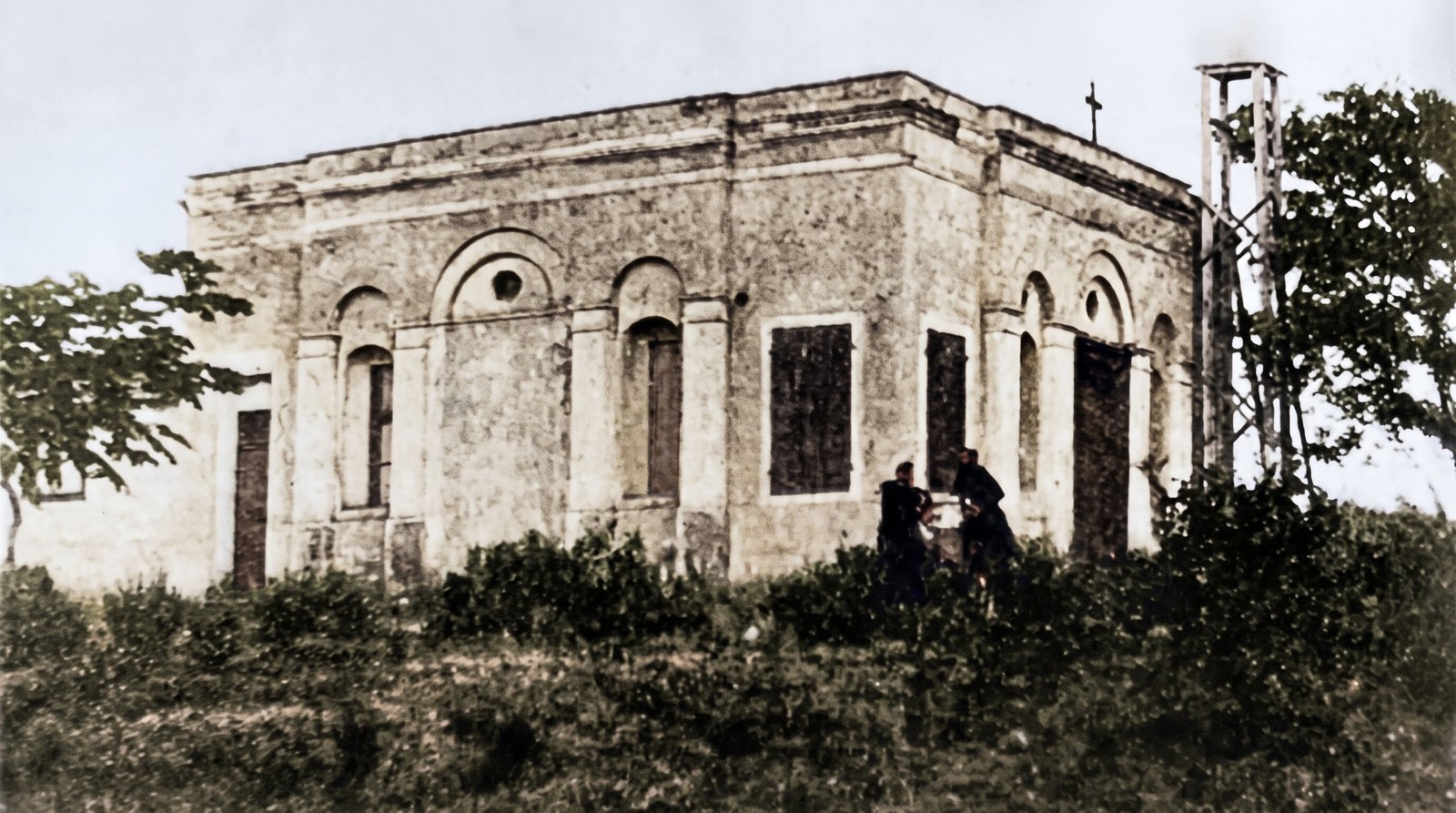
Capucin rahiplerinin "halk kilisesi", yanında rustik çan kulesi.The Capuchins' "people's church", with its rustic bell tower. [1, s. 44] Siyah-beyaz: dijital restorasyon. Renkler: yapay zekâ ile renklendirme (2026), belge değildir.Black and white: digital restoration. Colours: AI colourisation (2026), not a document. -
1886
Assomption rahipleri ve rahibeleri gelirThe Assumptionists arrive
2 Temmuz 1886'da Kumkapı'daki kiliseden bir müdür ve birkaç genç rahip Fenerbahçe'ye gelir; Baron Oppenheim'ın eski evine yerleşerek "Aziz Jean" (Saint-Jean) ruhban evini kurarlar. Halk bu ilk eve "Belçikalının evi" der; 1886–1890 arasında yemekler bahçedeki kestane ağaçlarının altında yenir, etütler orada yapılır.On 2 July 1886 a director and a few young priests come from the church at Kumkapı and settle in Baron Oppenheim's old house, founding the "Saint-Jean" seminary house. Locals call it "the Belgian's house"; from 1886 to 1890 meals are eaten and studies held under the chestnut trees in the garden. [1, s. 43, 48, 50]
Aynı yıl Assomption rahibeleri, Rahibe Augustine önderliğinde Kumkapı'dan ayrılıp Fenerbahçe'ye gelir; bina olmadığından ilkel bir barakada başlarlar. Yerli halk onlara başta soğuk, hatta düşmanca davranır; bir Belçikalı komşunun ölümünde gösterdikleri yakınlık buzları eritir.The same year the Assumptionist sisters, led by Sister Augustine, leave Kumkapı for Fenerbahçe and begin in a primitive hut, there being no building. The locals are cold, even hostile, at first; the sisters' care at the death of a Belgian neighbour breaks the ice. [1, s. 46]

"Phanaraki Ruhban Okulu'nun ilk yerleşimi", 1886–1890. Dönem gravürü."First installation of the Phanaraki seminary", 1886–1890. Period engraving. [1, s. 48] Dijital restorasyon (2026).Digital restoration (2026). -
1887
Arazi ve fermanLand and a decree
Rahip Joseph Maubon, Baron Oppenheim'dan birçok parsel satın alır. Bir rahip, Sultan Abdülhamid'den küçük bir kilise yapmak için ferman almayı başarır; eski Capucin mabedi yıkılarak yerine sonradan "Fenerbahçe Fransız Mektebi" ya da "Rahibe Mektebi" denecek bina yapılmaya başlanır.Father Joseph Maubon buys several plots from Baron Oppenheim. A priest obtains a decree from Sultan Abdülhamid to build a small church; the old Capuchin chapel is pulled down and the building later known as the "French School" or "Sisters' School" begins to rise in its place. [1, s. 46, 50]
-
1889
Rahibe Okulu ve kilisesi tamamlanırThe Sisters' School and its church are completed
Dört katlı okul binası ve kuzey tarafına bitişik kilise 1889'da tamamlanır; çevresi yüksek duvarlarla çevrilir. Aynı yıl Fransa'da çıkan bir kanun doğuda görev yapan rahipleri askerlikten muaf tutar; Fenerbahçe'deki rahip sayısı hızla artar ve eldeki bina yetmez olur.The four-storey school and the church adjoining it on the north are completed in 1889, and the grounds are walled. That same year a French law exempts priests serving in the East from military service; the number of priests in Fenerbahçe grows quickly and the building is soon too small. [1, s. 50, 58]

"Maison des Sœurs à Phanaraki": Rahibe Okulu, arkada Marmara."Maison des Sœurs à Phanaraki": the Sisters' School, the Marmara behind. [1, s. 45] Dijital restorasyon (2026).Digital restoration (2026). -
1890
Bugünkü bina yükselirToday's building rises
Belçikalı Piyer Hulback, Baron Oppenheim'ın evini ve Otel Sebastian'a kadar uzanan araziyi satın alır, eski evi yıktırır ve bugünkü binayı inşa ettirir. Yemekhane ve etüt salonlarını içeren iki kanadı Belçikalı Cingrie ekler; böylece okul ile kiliseden oluşan bugünkü bütün ortaya çıkar. Kilisenin yapıldığı yıllarda etraf tamamen boştur; bugün apartmanlarla dolu yerde koyunlar otlar.The Belgian Pierre Hulback buys Baron Oppenheim's house and the land stretching to the Hotel Sebastian, demolishes the old house and has today's building built. The Belgian Cingrie adds two wings with a refectory and study halls, and the present ensemble of school and church takes shape. In those years the surroundings are completely empty; sheep graze where apartment blocks stand today. [1, s. 43, 49–51]
Kilisenin yapım yılı Kültür Envanteri'nde 1892 olarak kayıtlıdır (KE No 187471). Aziz Augustin'e adanış tarihi için cemaat kayıtları beklenmektedir.The Cultural Inventory records the church's construction year as 1892 (KE No 187471). The date of the dedication to Saint Augustine awaits confirmation from parish records. [2]

Fr. Rône'nin çizdiği Semadeni'ye ait ikiz evler; önce rahibelere, sonra kısa süre öğrencilere barınak oldu.The twin Semadeni houses drawn by Fr. Rône; they sheltered first the sisters, then briefly the students. [1, s. 47, 50] Dijital restorasyon (2026); orijinaldeki el yazısı oda notları (Fransızca) bu kopyada gösterilmemiştir.Digital restoration (2026); the handwritten room labels (in French) of the original are not shown in this copy. -
1900
On dört nesil rahipFourteen generations of priests
Fenerbahçe Ruhban Okulu, Assomption'ların beşiği olmasa da on dört nesil rahip yetiştirir; doğudaki birçok Assomption evi buradan giden rahipler tarafından kurulur. Öğrencilerin çoğu Rum'dur; on beş Rum ve Bulgar öğrenci geleceğin rahibi olarak okulu bitirir.Though not the cradle of the Assumptionists, the Fenerbahçe seminary trains fourteen generations of priests, and many Assumptionist houses in the East are founded by men who leave from here. Most students are Greek; fifteen Greek and Bulgarian students graduate as future priests. [1, s. 51]

1900: Ruhban Okulu'nun öğrenci ve hocaları, Fenerbahçe'deki eski hamam kalıntısının önünde.1900: students and teachers of the seminary in front of the old bath ruins in Fenerbahçe. [1, s. 51] Dijital restorasyon (2026).Digital restoration (2026). -
1903
Okul batıya taşınırThe seminary moves west
1903'te çıkarılan askerî bir kanunla bina boşaltılır ve ruhban okulu batıya göç eder. 1903–1905'te felsefe öğrencileri, 1905–1906'da ilahiyat âlimleri binaya yerleşir; kısa süre boş kalan bina sonra Rum talebeler için küçük bir "Grek Papaz Okulu", ardından 1914'e kadar Ermeni Papaz Okulu olarak kullanılır.A military law of 1903 empties the building and the seminary migrates west. Philosophy students occupy it in 1903–1905, theologians in 1905–1906; after a short vacancy it serves as a small "Greek priests' school" and then, until 1914, as an Armenian priests' school. [1, s. 51, 58]
-
1910
Kilise ve okul, bir aradaChurch and school, side by side
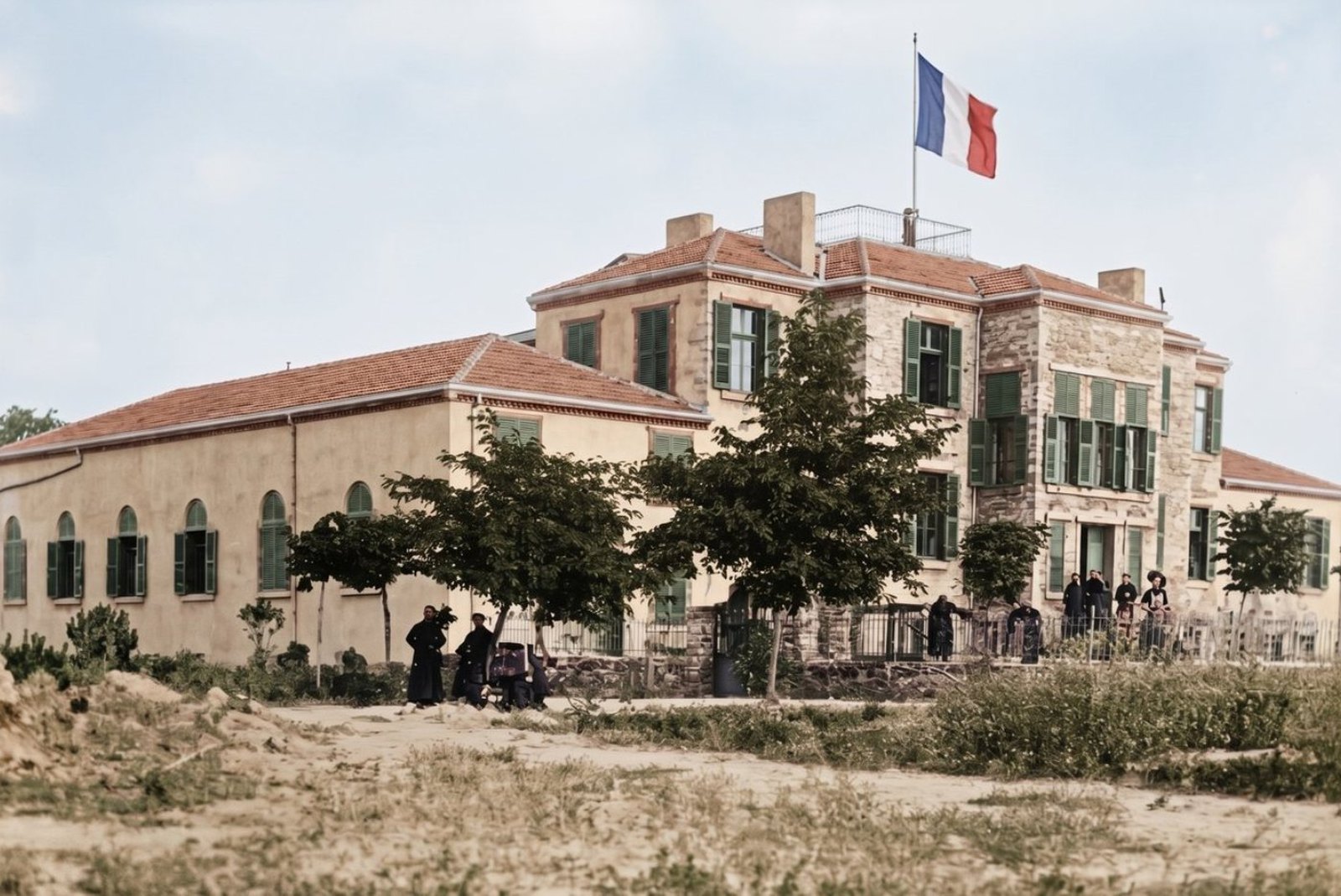
Fenerbahçe Kilise ve Ruhban Okulu binasının 1910'daki hali. Soldaki kemerli pencereli kanat bugünkü şapeldir.The church and seminary building in 1910. The wing with arched windows on the left is today's chapel. [1, s. 49] Siyah-beyaz: dijital restorasyon. Renkler: yapay zekâ ile renklendirme (2026), belge değildir.Black and white: digital restoration. Colours: AI colourisation (2026), not a document. -
1914
Savaş: hastane olurWar: a hospital
Birinci Dünya Harbi çıkınca bina askerî nekahethane olarak kullanılır; Rahibe Okulu tifüs hastalarına tahsis edilir, rahibeler dağılır. Savaş sonunda rahibeler geri dönüp okulu onarır, ancak bina üç yıl boyunca Karmelitlerin elinde kalır; rahibeler 1921'de Rahibe Okulu'nun arkasındaki "Rahiplerin Evi" denilen Assomption binasına yerleşir ve Karmelitler 1922'de ayrılınca okullarına döner. 1924'te okulda 64 öğrenci vardır.With the First World War the building becomes a military convalescent hospital; the Sisters' School is given over to typhus patients and the sisters disperse. After the war the sisters return and repair the school, but for three years it is occupied by the Carmelites; in 1921 the sisters move into the Assumption building behind it, known as the "Priests' House", and return to their school when the Carmelites leave in 1922. By 1924 it has 64 pupils. [1, s. 58–59]
-
1919
Rahipler geri dönerThe fathers return
1919'da Assomption binası tekrar rahipler tarafından ele geçirilerek tamir edilir ve İkinci Dünya Harbi'ne kadar küçük bir papaz okulu olarak kullanılır. Rahibe Okulu ise 1934'te kapanır; ona bitişik şapel sonraki yıllarda yıkılır ve okul apartmana dönüştürülür.In 1919 the fathers recover and repair the Assumption building, using it as a small priests' school until the Second World War. The Sisters' School closes in 1934; its adjoining chapel is later demolished and the school converted into apartments. [1, s. 58–59]
-
1982
Bahçe, kulüp olurThe garden becomes a club
Savaştan sonra kısa süre boş kalan manastır, Bay Cocchino ve ortaklarına otel ve restoran olarak kiraya verilir; yalnız yazları açık olan bu otelin ardından 1982 başında Erol Temelli ve ortakları, Assomption Kilisesi yöneticileriyle mukavele yaparak spor tesisleri kurmak üzere araziyi kiralar. Bugünkü Dalyan Club budur. Binaya bitişik kilisede ise her pazar Assomption rahipleri ayin yapmaya devam eder.Briefly empty after the war, the monastery is leased to Mr Cocchino and partners as a hotel and restaurant, open only in summer. In early 1982 Erol Temelli and partners sign a contract with the administrators of the Assumption Church and lease the grounds for sports facilities: today's Dalyan Club. In the church adjoining the building, the Assumptionist fathers go on celebrating Mass every Sunday. [1, s. 58] [2]
-
BugünToday
Kapı hâlâ açıkThe door is still open
Şapel, Moda'daki Notre Dame de l'Assomption cemaatine bağlı olarak her pazar 10:00'da ve her ayın ilk Cuması ayine ev sahipliği yapıyor. Bir şehir etrafında büyüdü; kestane ağaçlarının altındaki küçük kilise yerinde duruyor.Attached to the parish of Notre Dame de l'Assomption in Moda, the chapel hosts Mass every Sunday at 10:00 and on the first Friday of each month. A city has grown up around it; the little church under the chestnut trees is still standing. [3]
Bugün şapelle Zeynep Monica Öztoprak ilgileniyor. Rahmetli eşi Emin Öztoprak da yıllarca bu görevi üstlenmiş, şapele birlikte emek vermişlerdir. Şapelin bugün bu kadar iyi durumda olması, büyük ölçüde Zeynep Hanım'ın özenli ve bitmeyen bakımı sayesindedir.Today the chapel is looked after by Zeynep Monica Öztoprak. Her late husband, Emin Öztoprak, did the same for many years, and together they gave the chapel their care. That the chapel is in such good condition today is above all thanks to Zeynep's devoted, untiring care. [cemaat bilgisi][parish information]
KaynaklarSources
- [1] Dr. Müfid Ekdal, Bir Fenerbahçe Vardı, III. Bölüm, s. 43–59. Kitabın kendi kaynakları arasında Assomption arşivleri yer alır: "Souvenirs, 28 Février 1914", "Alumnats 1920, Pages d'archives", "Mission de l'Assomption en Orient 1862–1924" ve Kadıköy Assomption Kilisesi kayıtları.The book's own sources include the Assumptionist archives: "Souvenirs, 28 Février 1914", "Alumnats 1920, Pages d'archives", "Mission de l'Assomption en Orient 1862–1924" and the records of the Kadıköy Assumption Church.
- [2] Kültür Envanteri, "St. Augustin Katolik Kilisesi", KE No 187471 — kulturenvanteri.com
- [3] Moda-Fenerbahçe Notre Dame de l'Assomption Latin Katolik Kilisesi, ayin saatlerimass times — dirilen.com
- [4] İstanbul Latin Katolik Kilisesi, "Aziz Augustinus Kilisesi" — latinkatolikkilisesiistanbul.com
- [5] Dijital İstanbul, "Aziz Augustin Kilisesi" — dijitalistanbul.org
Tarihî fotoğraflar ve çizimler [1] numaralı kaynaktan alınmıştır; 100 yılı aşkın eserlerdir. Bazı fotoğraflar yapay zekâ ile dijital olarak restore edilmiş, ikisi renklendirilmiştir; orijinal sayfalar kitapta görülebilir.Historical photographs and drawings are taken from source [1]; all are more than a century old. Some photographs were digitally restored with AI and two were colourised; the original pages can be seen in the book.
